Introduction
Online education has moved far beyond being an alternative to traditional learning. In recent years, e-learning has emerged as a powerful force reshaping how people acquire skills, build careers, and adapt to a rapidly changing job market. By the mid-2020s, digital learning platforms have become central to personal and professional development across the globe.
The future of online education is not just about convenience or remote access. It is about relevance, flexibility, and lifelong learning. As industries evolve faster than ever, e-learning is redefining skills and careers by offering practical, future-ready education that aligns closely with real-world demands.
The Shift from Degrees to Skills-Based Learning
One of the most significant changes driven by online education is the shift from degree-focused learning to skill-based learning. Employers are increasingly prioritizing practical skills, problem-solving ability, and adaptability over formal academic credentials alone.
E-learning platforms focus on job-ready skills that can be applied immediately in the workplace. Learners can acquire specific competencies without committing to long-term degree programs, making education more targeted and career-oriented.
Accessibility and Global Reach of E-Learning
Online education has removed geographical and financial barriers that once limited access to quality learning. Students and professionals from any part of the world can now access courses taught by industry experts and top institutions.
This global reach democratizes education and creates equal opportunities for skill development. The future of learning is inclusive, allowing individuals to compete in global job markets regardless of their location or background.
Personalized Learning Experiences
The future of e-learning is deeply personalized. Advanced learning platforms use data and artificial intelligence to adapt content based on a learner’s pace, strengths, and goals. This personalization improves engagement and knowledge retention.
Unlike traditional classrooms that follow a fixed curriculum, online education allows learners to choose what, when, and how they learn. This flexibility supports diverse learning styles and career aspirations.
E-Learning and Career Transitions
Career paths are no longer linear. Many professionals change industries multiple times during their working lives. E-learning plays a crucial role in supporting these transitions by offering fast, affordable reskilling and upskilling options.
Online education empowers individuals to explore new fields, gain certifications, and build portfolios without starting from scratch. This adaptability makes career changes more achievable and less risky.
The Role of Technology in Modern Learning
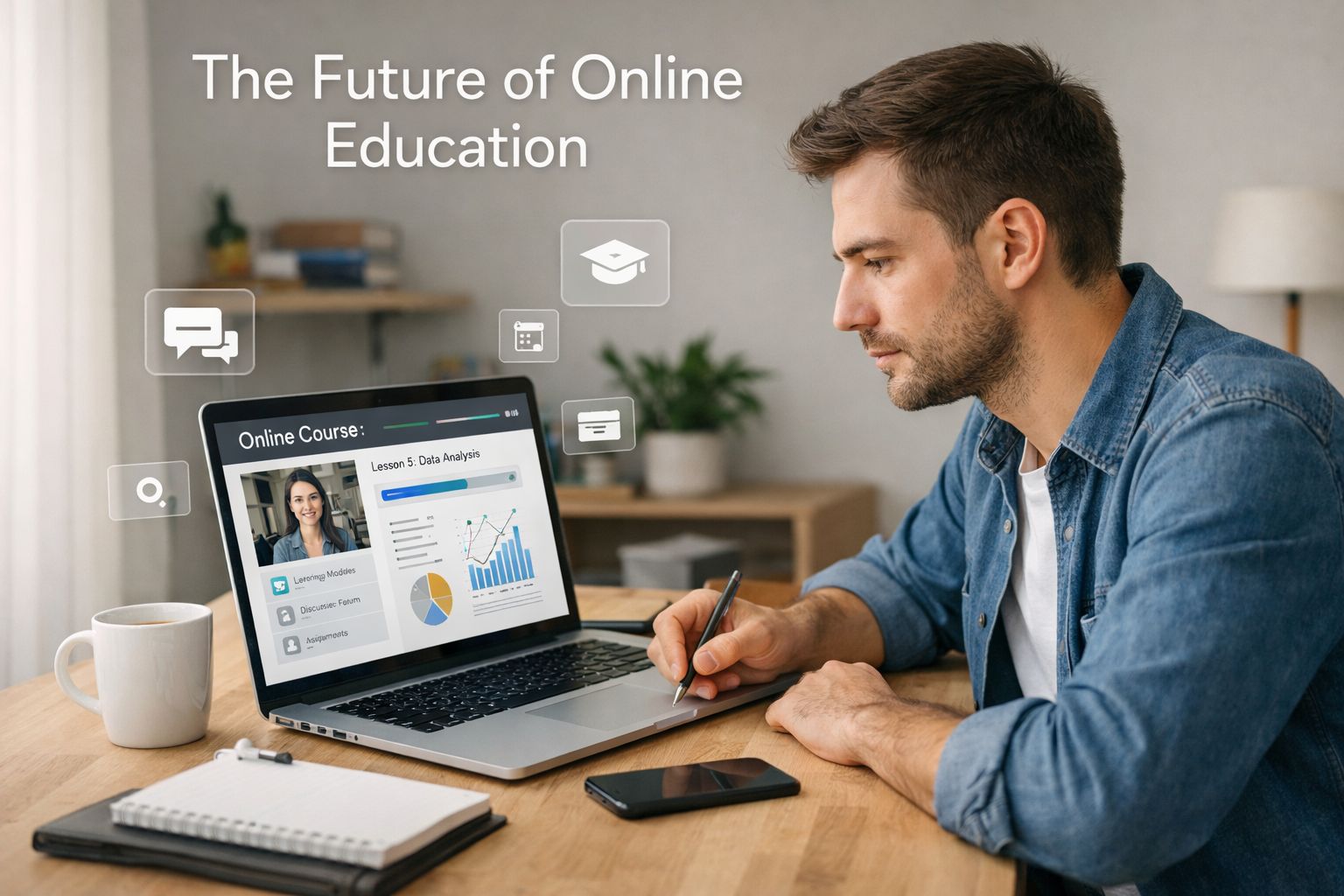
Technology continues to enhance the effectiveness of online education. Interactive tools, virtual classrooms, simulations, and AI-powered tutors create engaging learning environments that rival traditional classrooms.
As technology evolves, learning experiences will become more immersive and practical. These innovations help bridge the gap between theory and real-world application, making e-learning a powerful career development tool.
Industry-Relevant Curriculum and Real-World Skills
E-learning platforms collaborate closely with industry professionals to design relevant and up-to-date curricula. This ensures learners acquire skills that are in demand and aligned with current market needs.
By focusing on practical projects and real-world scenarios, online education prepares learners for immediate employment or career advancement. This industry alignment gives e-learning a strong advantage in career-focused education.
Affordability and Return on Investment
The cost of education is a major concern for learners worldwide. Online education offers a more affordable alternative to traditional degrees while delivering high-value skills.
Lower costs, flexible payment options, and shorter learning cycles make e-learning accessible to a wider audience. Learners can see faster returns on investment by applying newly acquired skills directly to their careers.
E-Learning and Lifelong Learning Culture
The future workforce must continuously update skills to remain competitive. Online education supports lifelong learning by offering modular courses, micro-credentials, and continuous skill development.
This culture of lifelong learning encourages curiosity, adaptability, and professional growth. E-learning platforms make it easier for individuals to stay relevant throughout their careers.
Changing Employer Perceptions of Online Education
Employer attitudes toward online education have evolved significantly. Certifications and credentials from reputable e-learning platforms are now widely accepted, especially in technology, business, and creative industries.
Employers value candidates who demonstrate initiative, continuous learning, and practical skills. E-learning enables individuals to showcase these qualities through portfolios, certifications, and hands-on experience.
Challenges Facing Online Education
Despite its growth, online education faces challenges such as digital access gaps, self-discipline requirements, and varying quality across platforms. Ensuring consistent learning outcomes remains an ongoing effort.
However, continuous innovation and improved platform standards are addressing these challenges. The future of e-learning lies in enhancing quality, accessibility, and learner support.
The Future Outlook of Online Education
As artificial intelligence, virtual reality, and data-driven learning tools advance, online education will become even more effective and immersive. Learning will increasingly integrate with work, allowing individuals to develop skills in real time.
The boundary between education and employment will continue to blur, making learning a continuous part of professional life rather than a one-time phase.
Conclusion
The future of online education is reshaping how skills are acquired and careers are built. E-learning offers flexibility, accessibility, and industry-relevant training that meets the demands of a fast-changing world. By focusing on practical skills and lifelong learning, online education empowers individuals to adapt, grow, and succeed in modern careers.
As industries continue to evolve, e-learning will remain a cornerstone of professional development. Those who embrace continuous online learning will be better prepared to navigate the future of work with confidence and resilience.