
Introduction
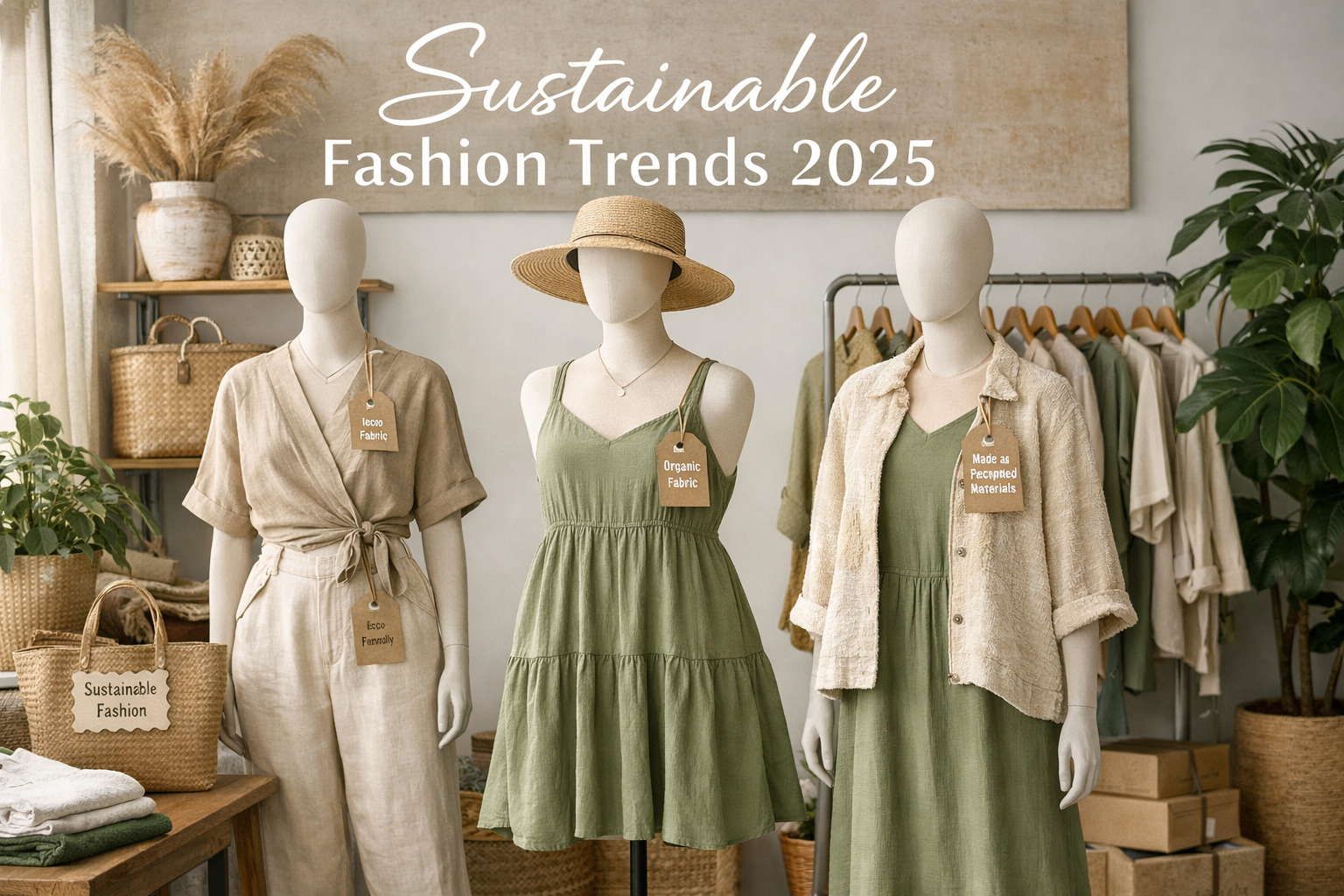
Fashion in 2025 is no longer just about looking good; it is about making conscious choices that reflect personal values and global responsibility. As climate awareness grows and consumers become more informed, sustainable fashion has shifted from a niche movement to a mainstream priority. Brands, designers, and shoppers alike are rethinking how clothing is produced, purchased, and worn. Eco-friendly styles and responsible shopping habits are shaping the future of the fashion industry, balancing creativity with sustainability.
This blog explores the key sustainable fashion trends in 2025, highlighting how innovation, ethical practices, and consumer awareness are transforming the way we dress. From materials and manufacturing to shopping behaviors and lifestyle changes, sustainable fashion is redefining style for a more responsible future.
The Shift Toward Conscious Fashion
The fashion industry has long been criticized for its environmental impact, but 2025 marks a turning point toward accountability and transparency. Consumers now expect brands to disclose where and how their products are made. This shift is driven by increased awareness of issues such as textile waste, water pollution, and unethical labor practices.
Conscious fashion emphasizes quality over quantity, encouraging shoppers to invest in timeless pieces rather than fast-changing trends. This mindset not only reduces waste but also promotes a deeper connection between people and their clothing. Sustainable fashion in 2025 is about intentional choices that align with long-term environmental and social well-being.
Eco-Friendly Materials Leading the Way
One of the most significant trends in sustainable fashion is the rise of eco-friendly materials. In 2025, designers are moving away from conventional fabrics that rely heavily on chemicals and water-intensive processes. Instead, they are embracing organic cotton, recycled polyester, hemp, bamboo, and innovative bio-based fabrics.
These materials reduce environmental impact while maintaining comfort, durability, and style. Advances in textile technology have also led to the development of lab-grown leather and plant-based alternatives that mimic traditional fabrics without harming animals or ecosystems. Eco-friendly materials are no longer a compromise but a standard for forward-thinking fashion brands.
Circular Fashion and Clothing Longevity
Circular fashion is a core principle of sustainability in 2025. This approach focuses on extending the lifecycle of garments through reuse, recycling, and regeneration. Brands are designing clothes with durability in mind, ensuring they can be worn, repaired, and repurposed over time.
Consumers are increasingly participating in resale platforms, clothing rental services, and second-hand shopping. These practices reduce textile waste and promote a culture of mindful consumption. Circular fashion encourages people to view clothing as a long-term investment rather than disposable items, reshaping the relationship between consumers and their wardrobes.
Ethical Production and Fair Labor Practices
Sustainable fashion goes beyond materials and includes ethical production processes. In 2025, transparency in supply chains is a key expectation. Brands are adopting fair labor practices, ensuring safe working conditions and fair wages for garment workers.
Technology plays a crucial role in tracking production stages and verifying ethical standards. Consumers can now access detailed information about a product’s journey, from raw material sourcing to final manufacturing. Ethical fashion builds trust and fosters a sense of responsibility, making conscious shopping a powerful tool for positive change.
Minimalism and Timeless Design
Minimalist fashion continues to gain popularity in 2025, emphasizing simplicity, versatility, and timeless appeal. Neutral colors, clean lines, and classic silhouettes dominate sustainable collections, allowing pieces to remain stylish across seasons.
This trend encourages consumers to curate smaller, more intentional wardrobes. By focusing on quality and versatility, minimalist fashion reduces overconsumption and waste. Timeless design ensures that clothing remains relevant, supporting sustainability through longevity and repeated use.
Technology Driving Sustainable Innovation
Technology is revolutionizing sustainable fashion in 2025. Artificial intelligence helps brands forecast demand accurately, reducing overproduction and excess inventory. Digital design tools minimize material waste during the prototyping process.
Blockchain technology enhances transparency by verifying sourcing and production claims. Virtual fitting rooms and augmented reality experiences reduce return rates, lowering the environmental cost of shipping and logistics. Technology enables brands to operate more efficiently while meeting sustainability goals.
Responsible Shopping Habits
Sustainable fashion trends are strongly influenced by changing consumer behavior. In 2025, shoppers prioritize responsible shopping habits by researching brands, reading labels, and choosing ethically produced clothing. Conscious consumers value sustainability certifications and transparent communication.
Buying less but better has become a guiding principle. Shoppers are willing to invest in higher-quality garments that last longer and align with their values. Responsible shopping empowers individuals to support ethical brands and contribute to a more sustainable fashion ecosystem.
Upcycling and Creative Expression
Upcycling is gaining momentum as a creative and sustainable fashion trend in 2025. Designers and consumers alike are transforming old garments into new, unique pieces. This practice reduces waste and celebrates individuality.
Upcycling encourages creativity and innovation, allowing people to personalize their style while minimizing environmental impact. Fashion becomes a form of self-expression rooted in sustainability, blending artistry with responsibility.
The Influence of Sustainable Fashion on Lifestyle
Sustainable fashion in 2025 is closely connected to lifestyle choices. People are adopting eco-conscious habits beyond clothing, including mindful consumption, waste reduction, and ethical living. Fashion becomes a reflection of broader values centered on sustainability and well-being.
This holistic approach influences how individuals shop, dress, and interact with the world. Sustainable fashion supports a lifestyle that prioritizes balance, responsibility, and long-term impact over short-term trends.
Challenges and Opportunities in Sustainable Fashion
Despite progress, sustainable fashion still faces challenges in 2025. Cost, accessibility, and scalability remain concerns for both brands and consumers. However, growing demand and technological advancements continue to drive innovation and affordability.
Opportunities lie in collaboration, education, and continuous improvement. As more brands adopt sustainable practices and consumers embrace responsible shopping, the fashion industry moves closer to a more ethical and environmentally friendly future.
Conclusion
Sustainable fashion trends in 2025 represent a powerful shift toward eco-friendly styles and responsible shopping. Through conscious material choices, ethical production, circular practices, and mindful consumption, fashion is evolving into a force for positive change. Sustainability is no longer an alternative option but a defining element of modern style.
As consumers, embracing sustainable fashion means making informed choices that align with personal values and global responsibility. By supporting ethical brands and adopting mindful shopping habits, individuals can contribute to a future where fashion respects both people and the planet. Sustainable fashion in 2025 proves that style and responsibility can coexist beautifully.