
Introduction
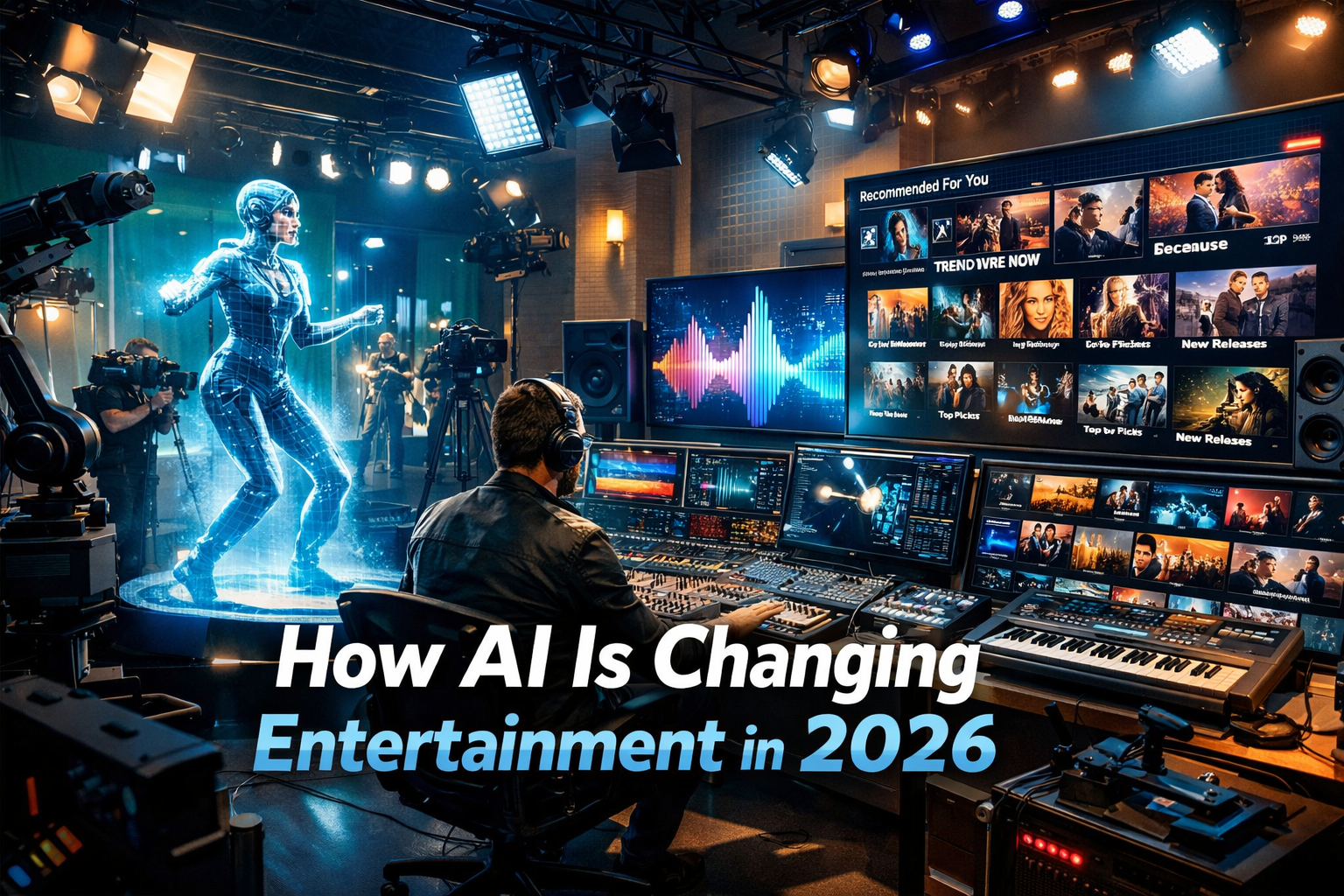
By 2026, artificial intelligence has become a central force shaping the global entertainment industry. Movies, music, and streaming platforms are no longer driven solely by human creativity and intuition but are increasingly supported by intelligent algorithms that analyze data, predict trends, and enhance storytelling. AI is not replacing creativity; instead, it is redefining how creative content is produced, distributed, and consumed.
From scriptwriting and music composition to personalized recommendations and virtual performances, AI is transforming entertainment into a more interactive, data-driven, and immersive experience. This shift is creating new opportunities for creators while changing how audiences engage with content across the world.
AI in Movie Production and Storytelling
AI is significantly influencing how movies are planned and produced in 2026. Filmmakers now use AI-powered tools to analyze scripts, predict audience reactions, and optimize story structure. These tools study past box office data, genre trends, and viewer preferences to help studios make informed creative and financial decisions.
AI is also being used in pre-production to assist with casting decisions, budget forecasting, and filming schedules. By reducing uncertainty and inefficiencies, AI allows filmmakers to focus more on storytelling and artistic vision while minimizing production risks.
AI-Driven Visual Effects and Animation
Visual effects and animation have seen remarkable advancements due to AI. In 2026, AI-powered software can generate realistic environments, characters, and special effects faster and more cost-effectively than traditional methods. Machine learning models enhance CGI realism by simulating natural movements, lighting, and textures with extraordinary accuracy.
This technology has democratized high-quality visual effects, enabling independent creators and smaller studios to produce visually stunning content. AI has lowered the barrier to entry, making cinematic-quality visuals accessible to a broader creative community.
AI in Film Editing and Post-Production
Post-production has become more efficient thanks to AI-assisted editing tools. In 2026, AI can automatically organize footage, identify the best takes, synchronize audio, and suggest edits based on pacing and emotional impact. These tools speed up the editing process while maintaining creative control in the hands of editors and directors.
AI also enhances color grading, sound design, and subtitling, making films more accessible to global audiences. This level of automation allows creators to deliver polished content faster and with greater consistency.
AI in Music Composition and Production
Music creation has been transformed by AI in 2026. AI-powered tools can compose melodies, generate beats, and even write lyrics based on specific moods, genres, or themes. Musicians use AI as a creative collaborator, experimenting with new sounds and styles that push artistic boundaries.
In music production, AI helps with mixing, mastering, and sound optimization. Artists can achieve professional-quality results without expensive studio setups, making music creation more inclusive and accessible than ever before.
Personalized Music Experiences
AI-driven personalization has changed how people discover and experience music. Streaming platforms in 2026 analyze listening habits, emotional responses, and contextual data to curate highly personalized playlists. Music recommendations now adapt to a listener’s mood, activity, and even time of day.
This personalization deepens emotional connections between listeners and music while helping emerging artists reach the right audiences. AI ensures that music discovery feels intuitive and meaningful rather than overwhelming.
AI and Virtual Artists in the Music Industry
Virtual artists and AI-generated performers are becoming increasingly popular in 2026. These digital musicians can release songs, perform virtual concerts, and interact with fans online. Powered by AI, virtual artists blur the line between technology and creativity, opening new forms of artistic expression.
While human artists remain central to the industry, virtual performers offer innovative storytelling opportunities and global reach. They also allow experimentation without the limitations of physical presence or schedules.
AI-Powered Streaming Platforms
Streaming platforms are among the biggest beneficiaries of AI innovation. In 2026, AI algorithms drive content discovery, optimize user interfaces, and personalize recommendations with remarkable precision. Viewers receive suggestions based on viewing history, preferences, and behavioral patterns.
AI also helps streaming platforms decide what content to produce by analyzing audience demand and engagement trends. This data-driven approach reduces risk and increases the likelihood of successful original productions.
Content Localization and Global Reach
AI has revolutionized content localization, making entertainment more accessible worldwide. In 2026, AI-powered translation, dubbing, and voice synthesis tools deliver high-quality localized content in multiple languages. This allows movies and shows to reach global audiences faster and more affordably.
Cultural adaptation powered by AI ensures that content resonates with diverse audiences while preserving its original essence. This has expanded the global influence of entertainment platforms and creators alike.
Interactive and Immersive Entertainment Experiences
AI is playing a key role in creating interactive entertainment experiences. In 2026, viewers can influence story outcomes, interact with characters, and explore personalized narratives in movies and series. AI adapts storylines in real time based on user choices, creating unique experiences for each viewer.
This shift transforms audiences from passive consumers into active participants, redefining how stories are told and experienced across entertainment platforms.
Ethical and Creative Challenges of AI in Entertainment
Despite its benefits, AI raises important ethical and creative questions. In 2026, concerns around originality, copyright, data usage, and job displacement remain central to discussions about AI in entertainment. Balancing technological efficiency with artistic integrity is a key challenge.
Industry leaders are increasingly focused on responsible AI use, transparency, and collaboration between humans and machines. Ensuring that AI enhances creativity rather than replaces it is essential for the sustainable growth of the entertainment industry.
The Future of Creativity in an AI-Driven World
AI is not the end of human creativity but a powerful extension of it. In 2026, the most successful creators are those who understand how to work alongside AI, using it as a tool to amplify imagination and innovation. Human emotion, storytelling, and cultural insight remain irreplaceable elements of entertainment.
As AI continues to evolve, it will unlock new creative possibilities, redefine artistic boundaries, and shape how stories are shared across the globe.
Conclusion
In 2026, artificial intelligence is reshaping movies, music, and streaming platforms in profound and lasting ways. From production and personalization to global distribution and immersive storytelling, AI is redefining the entertainment experience for creators and audiences alike. While challenges remain, the collaboration between human creativity and intelligent technology is driving an exciting new era of entertainment.
As AI continues to advance, its role in shaping stories, sounds, and digital experiences will only grow. The future of entertainment lies in embracing innovation while preserving the emotional and cultural essence that makes art meaningful.