Introduction
Education has always been the foundation of career growth, but by 2026, the way people learn has transformed dramatically. Traditional classroom education, once considered the only reliable path to success, now competes with modern e-learning platforms that offer flexibility, affordability, and skill-focused learning. As industries evolve rapidly due to technology, automation, and globalization, learners are questioning which education model truly prepares them for long-term career growth.
In 2026, choosing between e-learning and traditional education is no longer about convenience alone. It is about relevance, adaptability, and the ability to stay competitive in a constantly changing job market. This blog explores both approaches to help learners understand which path aligns better with their career goals.
Understanding Traditional Education in 2026
Traditional education remains a structured and widely recognized learning system in 2026. Universities and colleges continue to offer degree programs that emphasize academic depth, theoretical knowledge, and formal credentials. Classroom-based learning provides face-to-face interaction, peer collaboration, and direct guidance from experienced educators.
For careers that require formal certification, licensing, or extensive academic training, traditional education still holds strong value. Fields such as medicine, law, engineering, and research-based professions continue to rely heavily on institutional learning models.
The Rise of E-Learning and Online Education
E-learning has evolved into a powerful alternative to traditional education by 2026. Online learning platforms now offer high-quality courses designed by industry experts, universities, and global organizations. These platforms focus on practical, job-ready skills that align closely with current market demands.
With advancements in AI, virtual classrooms, and interactive learning tools, e-learning delivers personalized and engaging experiences. Learners can study at their own pace, access updated content, and gain skills without geographical or financial barriers.
Flexibility and Accessibility in Learning
One of the most significant advantages of e-learning in 2026 is flexibility. Online education allows learners to balance work, personal life, and education without rigid schedules. This accessibility is especially beneficial for working professionals, freelancers, and individuals looking to upskill or change careers.
Traditional education, while structured, often requires full-time commitment and physical presence. Although hybrid models are emerging, they still lack the level of flexibility that e-learning provides, making online education more appealing for modern career paths.
Skill Relevance and Industry Alignment
Career growth in 2026 depends heavily on relevant and up-to-date skills. E-learning platforms excel in this area by quickly adapting their curriculum to industry trends. Courses in AI, data science, digital marketing, cybersecurity, and remote work skills are updated frequently to match employer needs.
Traditional education programs, on the other hand, often take longer to update curricula due to institutional processes. While they offer strong foundational knowledge, they may not always keep pace with rapidly evolving industries.
Cost and Return on Investment
The cost of education is a major factor in career decisions. In 2026, e-learning is generally more affordable than traditional education. Online courses and certifications cost significantly less and eliminate expenses related to housing, transportation, and campus facilities.
Traditional education often requires a substantial financial investment, with tuition fees and long-term commitments. While degrees may offer credibility and networking opportunities, learners increasingly evaluate education based on return on investment and career outcomes.
Learning Experience and Interaction
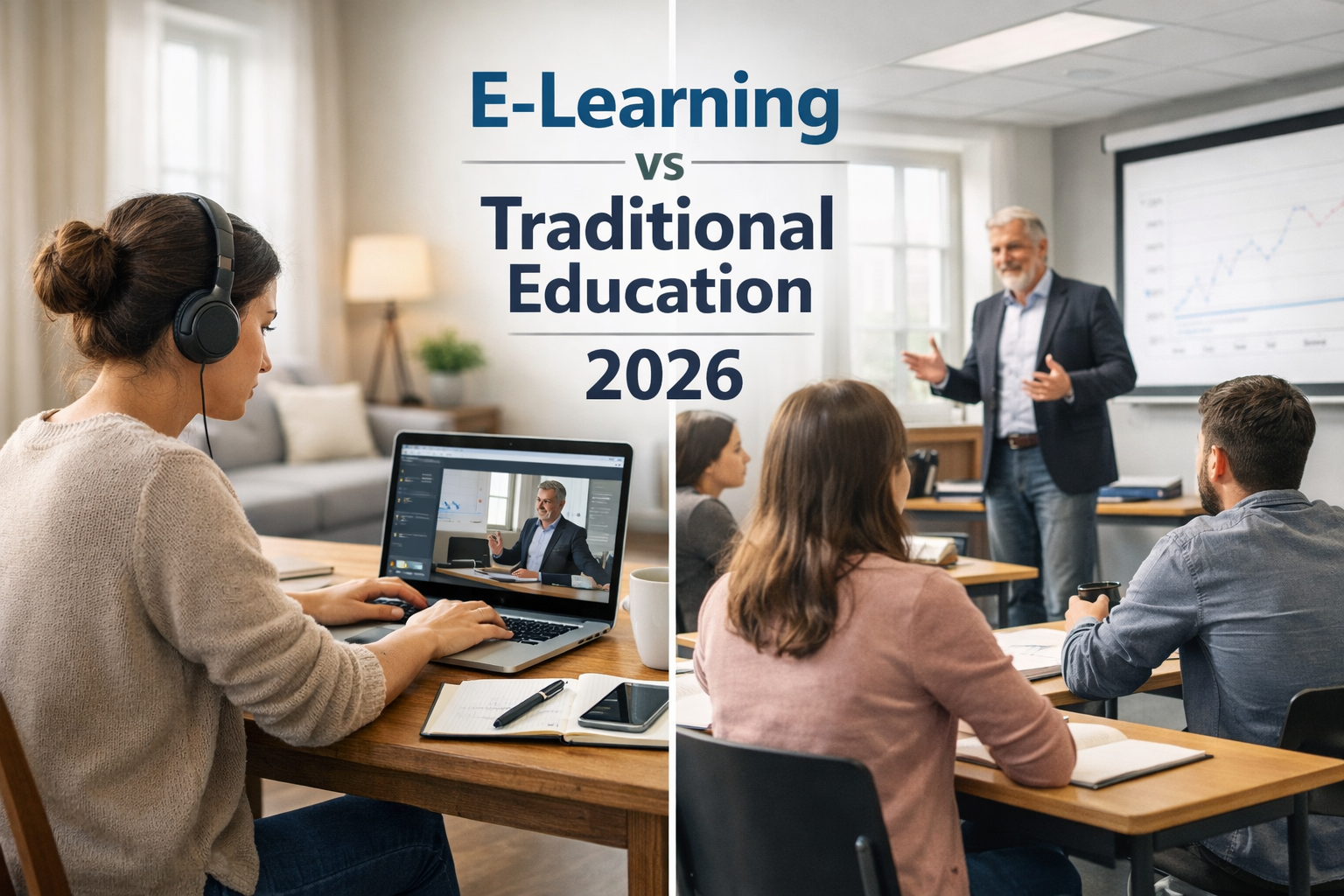
Traditional education provides structured environments that encourage discipline, collaboration, and social interaction. Classroom discussions, group projects, and campus experiences contribute to personal development and communication skills.
E-learning has significantly improved its interactive capabilities in 2026. Live sessions, discussion forums, virtual labs, and AI-powered tutors create engaging learning environments. While physical interaction is limited, digital collaboration tools help learners build professional networks globally.
Career Opportunities and Employer Perception
Employer perception of e-learning has changed positively by 2026. Many organizations now value skills, portfolios, and practical experience over formal degrees alone. Certifications from reputable online platforms are increasingly accepted, especially in technology, business, and creative industries.
Traditional degrees still hold prestige in certain sectors, but employers are focusing more on continuous learning and adaptability. Candidates who demonstrate real-world skills and a commitment to lifelong learning often gain a competitive edge.
Personalization and Learning Pace
E-learning platforms use AI-driven personalization to tailor content to individual learning styles and progress. In 2026, learners benefit from adaptive lessons, skill assessments, and personalized recommendations that enhance understanding and retention.
Traditional education follows standardized pacing, which may not suit all learners. While it provides structure, it can limit customization, making e-learning a more effective option for self-motivated individuals.
Long-Term Career Growth and Lifelong Learning
Career growth in 2026 is no longer linear. Professionals are expected to continuously upgrade their skills as industries evolve. E-learning supports lifelong learning by offering short courses, micro-credentials, and ongoing skill development.
Traditional education often serves as a starting point for a career rather than a continuous learning model. Combining foundational education with ongoing e-learning has become a popular strategy for sustained career growth.
Choosing the Right Path for Your Career
The decision between e-learning and traditional education depends on career goals, industry requirements, and personal circumstances. Those pursuing regulated professions may benefit more from traditional education, while individuals seeking flexibility, rapid skill acquisition, or career transitions may find e-learning more suitable.
In 2026, the most successful learners often combine both approaches, leveraging the strengths of each to build adaptable and future-ready careers.
Conclusion
In 2026, both e-learning and traditional education play vital roles in career growth. Traditional education offers structure, academic depth, and formal recognition, while e-learning provides flexibility, affordability, and skill-focused learning. Neither approach is universally better; the best choice depends on individual goals and industry demands.
As the job market continues to evolve, the ability to learn continuously and adapt quickly matters more than the format of education. By choosing the right learning path—or combining both—individuals can position themselves for long-term career success in an ever-changing world.