
Introduction
Modern life moves fast. Notifications never stop, responsibilities keep piling up, and the pressure to do more, earn more, and achieve more often feels overwhelming. In this constant rush, many people find themselves exhausted, disconnected, and unsure of what truly matters. This is where the idea of simple living becomes not just appealing, but essential.
Simple living is not about giving up comfort or ambition. It is about intentionally choosing a life with less clutter, fewer distractions, and more meaning. In a busy world, simple living helps you slow down, regain balance, and reconnect with your inner peace and purpose. This blog explores what simple living truly means, why it matters in today’s world, and how you can create a calmer, more fulfilling life without escaping modern responsibilities.
Understanding Simple Living in Today’s World
Simple living is often misunderstood as minimalism or a life without material comforts. In reality, it is a mindset rather than a strict rulebook. It is about making conscious choices that align with your values instead of being driven by societal pressure, comparison, or constant consumption.
In today’s world, simple living means learning to filter what deserves your time, energy, and attention. It means saying no to unnecessary stress and yes to what genuinely adds value to your life. This could involve simplifying your schedule, reducing digital overload, decluttering your surroundings, or redefining success on your own terms.
Why Life Feels So Busy and Overwhelming
One of the main reasons life feels overwhelming is constant stimulation. From social media to emails and endless content, our minds rarely get a break. We are expected to be available all the time, productive at all hours, and emotionally strong through it all.
Another reason is the pressure to keep up. Comparison culture makes people believe they are falling behind if they are not constantly achieving more. This leads to burnout, anxiety, and a sense of emptiness even when goals are met. Simple living challenges this cycle by encouraging intentional choices instead of reactive living.
The Power of Slowing Down
Slowing down is one of the core principles of simple living. It does not mean doing less important work, but doing things with more awareness. When you slow down, you begin to notice your thoughts, emotions, and surroundings more clearly.
Slowing down allows you to make better decisions, enjoy small moments, and reduce mental noise. It creates space for reflection and helps you reconnect with what truly brings you joy and fulfillment. In a busy world, slowing down is a form of self-respect.
Decluttering Your Physical Space
Your environment has a direct impact on your mental state. Cluttered spaces often lead to cluttered minds. Simple living encourages keeping only what is useful, meaningful, or brings peace into your life.
Decluttering does not need to happen all at once. It can begin with small steps, such as organizing a single drawer or removing items you no longer use. As your space becomes calmer and more intentional, you may notice a sense of relief and clarity that extends beyond your home.
Simplifying Your Mental Space
Mental clutter can be even more exhausting than physical clutter. Constant worrying, overthinking, and multitasking drain emotional energy. Simple living encourages mental clarity by reducing unnecessary mental load.
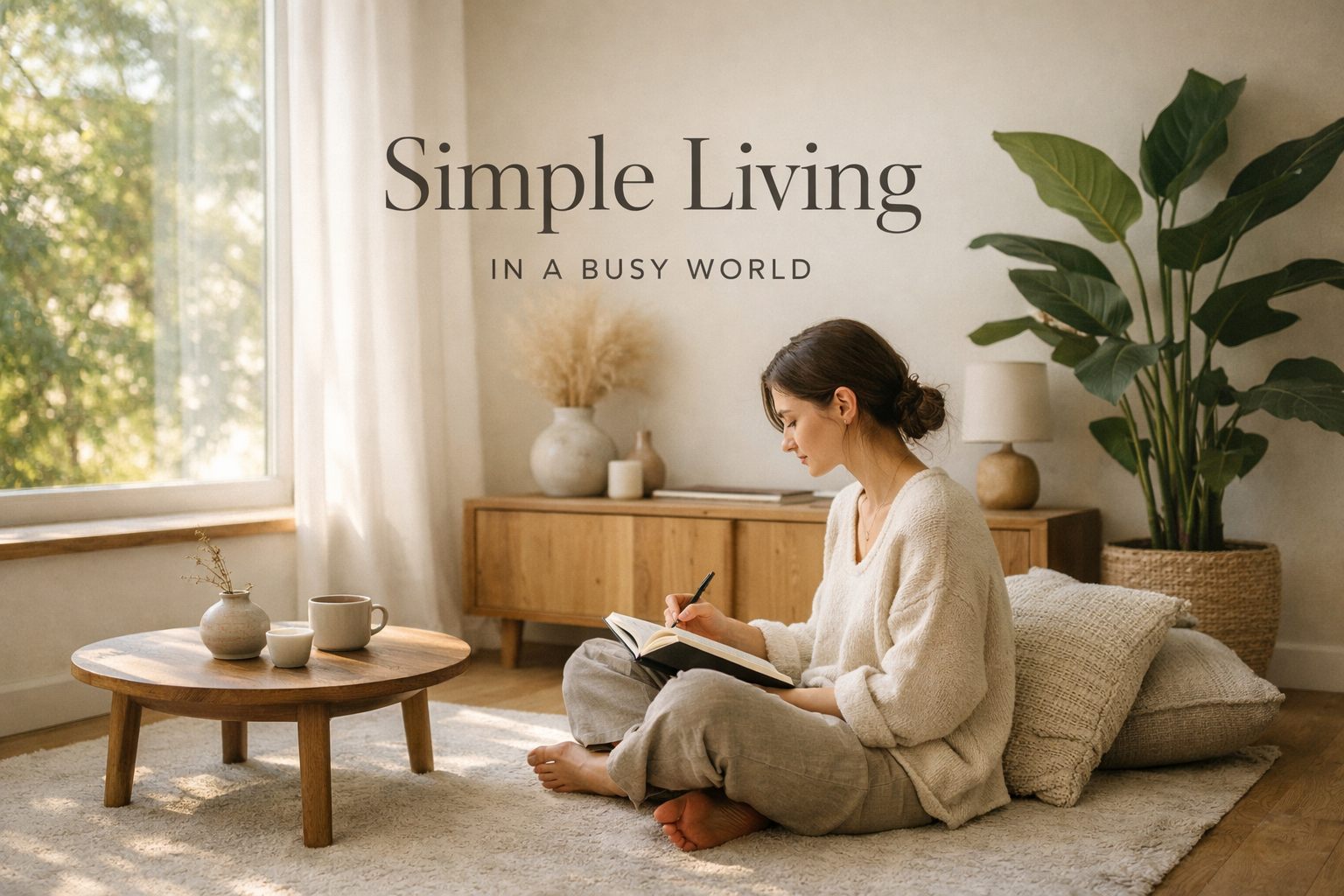
Practices like journaling, mindfulness, and reflection help release thoughts instead of holding onto them. Limiting exposure to negative news, social media comparison, and information overload also plays a major role in protecting mental peace.
Creating Balance Between Work and Life
In a busy world, work often spills into personal time. Simple living promotes healthy boundaries by encouraging balance rather than constant hustle. This means recognizing that rest is not laziness and personal time is not unproductive.
Creating balance may involve setting clear work hours, taking regular breaks, or learning to disconnect after the workday ends. When work and personal life are balanced, productivity improves naturally, and burnout becomes less likely.
Living with Intention Instead of Pressure
Intentional living is at the heart of simple living. Instead of letting external expectations control your decisions, you choose actions that align with your values. This could mean prioritizing health over overwork, relationships over status, or peace over constant achievement.
Intentional living brings clarity. When your choices are aligned with your purpose, life feels lighter and more meaningful. You begin to act from awareness rather than pressure.
Finding Peace in Everyday Moments
Simple living helps you rediscover peace in ordinary moments. A quiet morning, a mindful meal, a walk outside, or a meaningful conversation can become sources of joy when you are fully present.
Peace is not something to be achieved in the future. It exists in the present moment when distractions are reduced and awareness is increased. Simple living creates the conditions for peace to naturally arise.
Redefining Success and Purpose
Society often defines success in terms of money, status, and achievements. Simple living encourages a deeper definition of success, one that includes emotional well-being, meaningful relationships, personal growth, and inner peace.
Purpose is not always found in big goals. Sometimes it is found in living authentically, contributing in small ways, and enjoying the journey rather than constantly chasing outcomes. Simple living helps you reconnect with this deeper sense of purpose.
Letting Go of Comparison
Comparison is one of the biggest sources of dissatisfaction in a busy world. Simple living encourages focusing inward rather than constantly measuring yourself against others.
When you let go of comparison, you free yourself from unrealistic expectations. You begin to appreciate your own path, progress, and pace. This shift creates confidence, gratitude, and emotional freedom.
Building Meaningful Relationships
Simple living places value on depth over quantity, especially in relationships. Instead of spreading energy across many shallow connections, it encourages nurturing a few meaningful ones.
Being present, listening deeply, and spending quality time with loved ones strengthens bonds and creates emotional support. These relationships become anchors of peace and purpose in a busy life.
Consistency Over Perfection
Simple living is not about perfection. There will be busy days, stressful moments, and setbacks. What matters is consistency and self-compassion.
Progress happens gradually. Small intentional changes, practiced consistently, create long-lasting transformation. Simple living is a journey, not a destination.
Conclusion
Simple living in a busy world is not about escaping responsibility or rejecting modern life. It is about choosing clarity over chaos, intention over pressure, and peace over constant noise. By simplifying your space, your schedule, and your mindset, you create room for balance, peace, and purpose.
In a world that constantly demands more, choosing simplicity is a powerful act of self-awareness and strength. When you live simply, you begin to experience life more deeply, connect more meaningfully, and move forward with a sense of calm confidence. True fulfillment comes not from having more, but from needing less and living with intention.